
Typology Paris - Skincare
Typology developerBeauty
4.917.00 Reviews
- Version
- 1.13.0
- Installs
- 100.00K
- Age Rating
- Everyone
Screenshots
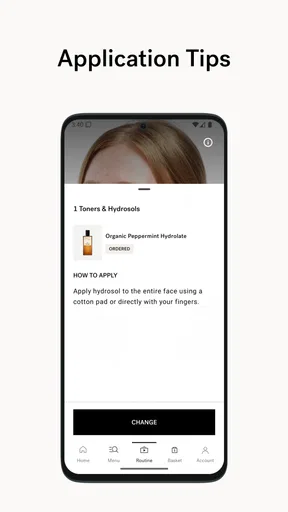
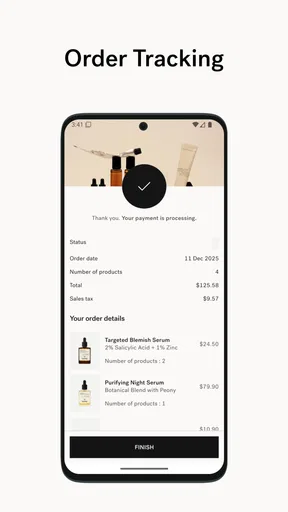
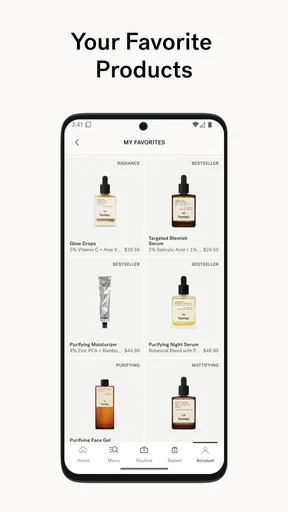
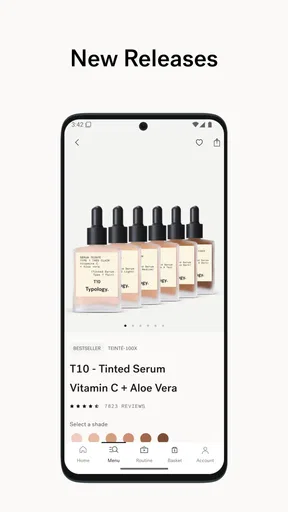
Our Review of Typology Paris - Skincare
 Analysis by Appyee
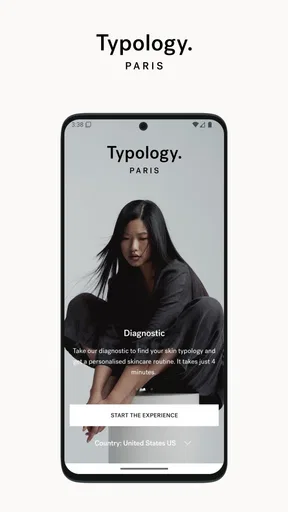
I first approached Typology Paris - Skincare as a practical beauty companion rather than another shopping app. That distinction matters. The app is built around Typology’s skincare experience, with the stated aim of helping users understand their skin, so its value depends less on endless browsing and more on whether it makes a personal routine easier to follow. After spending time with it, I found the strongest appeal in that focused approach: it encourages you to think about what your skin needs before reaching for another product.
That makes it interesting in a shared household too. A bathroom shelf may be communal, but skincare decisions are usually personal. One person may be dealing with dryness, another with sensitivity, and someone else may simply want a shorter routine. The app can support those conversations, but I would not treat it as a household account or a replacement for individual judgement. It works best when each person uses it as a guide for their own skin rather than assuming one recommendation suits everyone.
How Typology fits into everyday skincare
The developer, Typology developer, presents this as a beauty app rather than a general wellness platform. That focus is useful because it keeps the experience close to skincare questions: what am I using, why am I using it, and how might it fit into a routine? The store summary describes the experience as a way to become more knowledgeable about your skin, and that educational angle is the part I found most worthwhile.
In daily use, I would open it when I was tempted to change several products at once. That is a common mistake with skincare. If a routine suddenly includes a new cleanser, serum, exfoliant and moisturiser, it becomes difficult to tell what is helping or causing irritation. A more sensible workflow is to use the app to narrow the decision, choose one change, and give yourself time to observe the result. The app does not remove the need for patience, but it can encourage a more deliberate process.
For a household example, imagine two people getting ready in the morning. One wants a simple routine before work, while the other is comparing ingredients and trying to understand recurring dryness. Instead of sharing a single shelf strategy, they can use the app as a starting point for separate conversations. The first person may value clarity and speed; the second may spend more time learning. That difference is important because skincare is not automatically better when it becomes more complicated.
I also like the fact that the app is free. That lowers the barrier for someone who is curious but not ready to commit money to another beauty service. It is suitable for Everyone, which makes the tone approachable for a broad audience, although an age label should not be confused with medical guidance. Younger users may still need an adult’s help when choosing products, especially if they have persistent irritation or are using treatments recommended by a professional.
What the first setup should accomplish
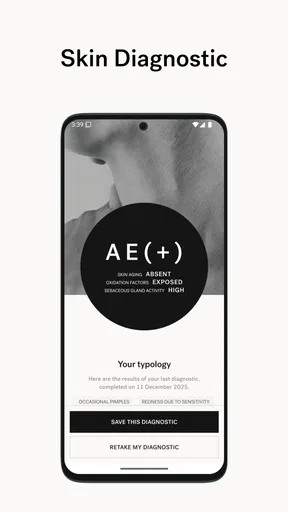
The best way to begin is not by treating the app like a quiz with a correct score. I would start with an honest description of the skin concern I actually want to address. If the goal changes every few minutes, the resulting routine can become unfocused. A useful setup boundary is to separate a long-term concern, such as dryness, from a temporary event, such as irritation after trying a new product.
This distinction becomes especially important on a shared device. A partner, child or housemate might open the app out of curiosity, but their answers should not be mixed with yours. If the experience is being used on one phone or tablet, I would complete one person’s exploration at a time and avoid treating saved or recently viewed information as a universal household profile. The app may be convenient to pass around, but skincare information still belongs to the individual who provided it.
There is also a practical reason to keep boundaries clear: product advice can be misunderstood when people compare themselves too casually. If one person sees a routine that seems to work for another, copying it may introduce ingredients their own skin does not tolerate. I would use the app to understand the reasoning behind a routine, not to duplicate someone else’s entire shelf.
A second useful boundary is to keep expectations realistic. An app can help organise information and make product choices less random, but it cannot inspect skin in the same way a qualified professional can. If a concern is painful, rapidly changing, or persistent, I would stop experimenting and seek appropriate medical advice. The app is most helpful for everyday learning and routine planning, not for diagnosing a condition.
Coordinating routines without turning skincare into a group project
Shared bathrooms create small but real coordination problems. Products get moved, pumps are left open, and someone may use the last of a cleanser without mentioning it. Typology Paris - Skincare can be useful as a conversation prompt because it gives household members a common place to discuss what they are trying to achieve. Still, I would keep the actual routine responsibilities personal.
My preferred approach would be simple. Each person decides which steps belong to them, labels or separates products if necessary, and checks the app independently when they want to learn more. That avoids the common mistake of creating one elaborate routine for everyone. A minimalist routine is often easier to maintain, particularly in a busy household where mornings are rushed.
One non-obvious benefit of this approach is that it exposes unnecessary duplication. Two people may own several products aimed at similar concerns without realising it. Reviewing the purpose of each item can reveal that the household does not need another similar serum; it may need clearer timing, consistent use, or better storage. The app is not a substitute for an inventory, but its focused skincare context can encourage that kind of audit.
Another useful habit is to change only one variable at a time. If I were using the app to refresh my routine, I would first record what I already use, then choose the most important gap. Adding several new products because they appear compatible makes it harder to learn anything. This is where the app’s educational purpose can be more valuable than a quick product search: it nudges the user toward understanding rather than impulse.
There is a trade-off, though. People who want a very fast shopping shortcut may find this approach slower than simply searching a retailer, reading a few reviews and checking out. That is not necessarily a flaw, but it means the app is better suited to thoughtful selection than to urgent replenishment. If I already know exactly what I need, a normal store app may be more efficient.
Age, trust and sensible supervision
The Everyone content rating makes the app approachable for general use, but families should still set their own expectations. A younger user may interpret a personalised-looking skincare suggestion as a promise. I would explain that skin can react differently from person to person and that “natural,” “gentle” or familiar-sounding language does not guarantee a product will suit everyone.
For a teenager, the app could be a useful way to learn basic skincare vocabulary and avoid buying products purely because they are popular. I would encourage them to share the routine they are considering with a parent or trusted adult, especially if they want to combine several active products. The goal should be informed experimentation within sensible limits, not pressure to correct every normal feature of growing skin.
Trust also matters between adults. Shared-device use can blur who is researching what, and a partner may accidentally assume that a saved item or recommendation was intended for them. I would avoid making decisions for another person based on their app activity. Asking directly is both clearer and kinder, particularly where sensitivity, allergies or personal preferences are involved.
The app’s high average rating of 4.8, alongside around 3.5 thousand ratings, suggests that many users find the experience appealing. I would treat that as encouraging rather than conclusive. A rating reflects broad satisfaction, not a guarantee that the app will understand my particular skin or household routine. The more individual the concern, the more important it becomes to read the guidance carefully and respond to my own experience.
Where it stands beside ordinary alternatives
Compared with a general beauty retailer, Typology Paris - Skincare feels more focused. A retailer is usually better when I want to compare brands, hunt for discounts, check delivery choices or buy several unrelated items. This app makes more sense when I want to stay within a skincare conversation and learn how products relate to skin concerns.
Compared with a paper routine or a notes app, it has a more specialised purpose. Notes are excellent for tracking dates, reactions and personal observations, and I would still use them if I wanted a detailed record. The app’s advantage is that it gives the skincare discussion a dedicated setting rather than leaving me to build all the structure myself.
Compared with social media advice, I prefer the app’s narrower context. Social platforms can offer useful personal experiences, but they also encourage trend-driven buying and dramatic before-and-after expectations. I would rather use this app to form questions and then judge products calmly than let a viral routine dictate what everyone in the house buys.
There are limits to that comparison. Users who expect a complete dermatology tool, a medical symptom checker or a full household organiser should choose something designed specifically for those jobs. This is a beauty app, and its usefulness comes from that narrower identity. It should complement careful observation and professional advice when needed, not replace either one.
Small habits that make the experience more useful
My first tip is to use the app before shopping, not only after buying. Starting with a clear concern can prevent a crowded basket and makes it easier to explain why a product belongs in the routine. If I begin after purchasing everything, I am more likely to search for reasons to justify what I already bought.
My second tip is to keep a short reaction log outside the app if I am testing something new. I would note the date, where it was applied, and whether the skin felt comfortable later. This creates a useful layer of personal evidence. The app can help me understand skincare choices, while the log tells me how my own skin responded.
My third tip is to use household discussions for coordination, not comparison. A weekly check-in can answer practical questions such as who needs a replacement and which products should not be shared. It should not become a competition over whose routine is longer or whose skin changes faster. The most successful routine is usually the one a person can follow consistently.
A fourth insight is to treat simplicity as a deliberate result, not a lack of knowledge. Learning more about skincare does not mean adding more steps. In my view, the app is at its best when it helps a user remove confusion, identify a sensible priority and stop buying products that overlap without a clear purpose.
The current version is 1.9.0, and the app requires Android 7.0 or later. That makes checking device compatibility a sensible first step before planning a shared household setup. Once installed, I would also make sure each person knows which information belongs to them and avoid assuming that a shared phone automatically creates a shared skincare plan.
Who should use it, and who should skip it
I would recommend Typology Paris - Skincare to someone who wants a more considered way to explore skincare, especially if they are tired of contradictory social media advice or random product browsing. It is also a good fit for a household where people want to discuss routines without pretending that one routine works for everybody. Beginners may appreciate the focused learning angle, while experienced users can use it to reassess whether their routine still has a clear purpose.
I would be less enthusiastic for someone who only wants the cheapest purchase path, a broad marketplace or immediate medical answers. That person may be better served by a retailer, a dedicated tracking tool or a qualified professional, depending on the need. I would also skip it as a sole source of guidance for serious or persistent skin problems.
Because it is free and has passed one hundred thousand installs, trying it carries little practical commitment. Still, free access does not make every recommendation personally suitable. I would judge the app by whether it improves my decisions, not by how many products it encourages me to consider.
My household verdict
After reviewing it as a beauty app for both individual and shared use, I see Typology Paris - Skincare as a focused learning companion rather than a universal skincare manager. Its strongest quality is the way it can turn vague concerns into a more organised conversation about routines, ingredients and priorities. That is genuinely helpful when a household has several people with different needs.
The key is to preserve personal boundaries. Use it one person at a time, keep expectations realistic, and do not copy another user’s routine without thinking about your own skin. For younger users, add sensible adult guidance; for persistent problems, involve a professional. Those habits make the app more useful and reduce the risk of treating a digital recommendation as a guarantee.
My final view is positive, with a clear qualification: the app is most valuable when it helps you simplify and understand your routine, not when it becomes another reason to buy more. If that is the kind of skincare support you want, its free access and focused design make it worth trying. If you need medical assessment, a full shopping marketplace or detailed household account management, I would choose a different tool and keep this one in a supporting role.
For me, that balance is what makes the experience credible. It does not need to replace every other skincare resource. It only needs to help a person make calmer, better-informed choices, whether they are standing alone in front of the bathroom mirror or coordinating several very different routines under one roof.
Privacy and Permissions
See what permissions an app requests and how it handles your data.
- Location
- approximate location (network-based), precise location (GPS and network-based)
- Photos/Media/Files
- read the contents of your USB storage, modify or delete the contents of your USB storage
- Storage
- read the contents of your USB storage, modify or delete the contents of your USB storage
- Microphone
- record audio
- Wi-Fi connection information
- view Wi-Fi connections
- Other
- view network connections, change network connectivity, full network access, change your audio settings, run at startup, draw over other apps, control vibration, prevent device from sleeping, read Google service configuration
Verdict
Strengths of Typology Paris - Skincare
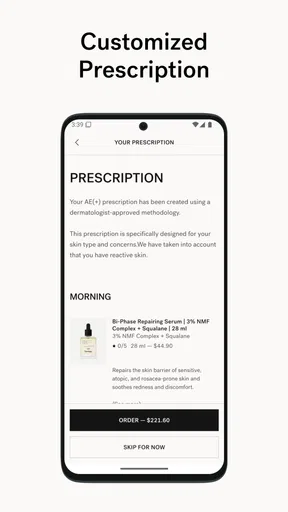
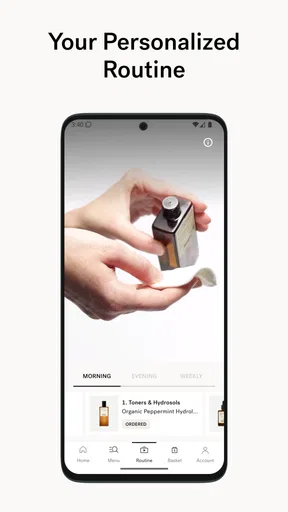
- Personalized routines make product selection easier for different skin concerns.
- Clean, minimalist interface is simple to navigate and visually appealing.
- Product details help users compare ingredients, benefits, and recommended usage.
- Routine tracking can encourage more consistent skincare habits.
- Useful educational content supports better understanding of skincare basics.
Limitations of Typology Paris - Skincare
- Some recommendations may require purchasing several products to follow fully.
- Results depend on consistent use and may vary significantly between users.
- Ingredient information may feel insufficient for users with complex sensitivities.
- The app may be less useful without access to Typology products.
- Certain features or content could be limited by region or account availability.
Similar Picks in This Category
View All
Beauty Makeup Editor & Camera
Photo & Video Editors - Instant Solution4.7

Perfect365: Face Makeup Editor
Perfect365, Inc.3.5

Mirror Plus - HD Mirror app
Digitalchemy, LLC4.8

Cute Lock Screen & Wallpapers
Prometheus Interactive LLC4.6

HD Camera for Android
One Music Player4.5

Phone Mirror app - True Mirror
Cards4.6
Frequently Asked Questions
What is Typology Paris, and what can I use the app for?
Typology Paris is the mobile shopping and skincare companion for the French beauty brand known for minimalist formulas and ingredient-focused products. In the app, you can browse cleansers, serums, moisturizers, masks, and body care, read ingredient information, compare products, and place orders. It is especially useful if you prefer a simple routine and want to learn more about why each formula is recommended.
Can Typology Paris help me choose products for my skin type?
Yes. Typology Paris provides product descriptions, skin-concern categories, and guidance intended to help you build a routine for concerns such as dryness, blemishes, sensitivity, dullness, or uneven tone. However, recommendations should be treated as general skincare guidance rather than a medical diagnosis. If your skin is reactive or you have a diagnosed condition, review the ingredients carefully and consult a dermatologist before changing your routine.
Are Typology Paris products suitable for sensitive or acne-prone skin?
Some Typology products are designed with sensitive, dry, oily, or blemish-prone skin in mind, but suitability depends on the individual formula and your personal sensitivities. The app makes it possible to inspect ingredient lists and product details before buying, which is helpful for avoiding known triggers. Introduce new products gradually, perform a patch test, and stop using any product that causes persistent irritation.
Can I purchase Typology products directly through the app?
The app is primarily designed to let users explore Typology’s catalog and shop for products directly, depending on availability in their country or region. You can usually view product information, select items, add them to a basket, and continue through the checkout process. Before ordering, check delivery coverage, shipping costs, estimated arrival times, accepted payment methods, and the applicable return policy.
Is Typology Paris free to download, and does it require an account?
Typology Paris can generally be downloaded without an upfront fee, although the skincare products themselves must be purchased separately. You may be able to browse some content without signing in, but an account can be required or strongly encouraged for checkout, order tracking, saved preferences, and access to your purchase history. Review the app’s permissions and privacy information before creating an account.
